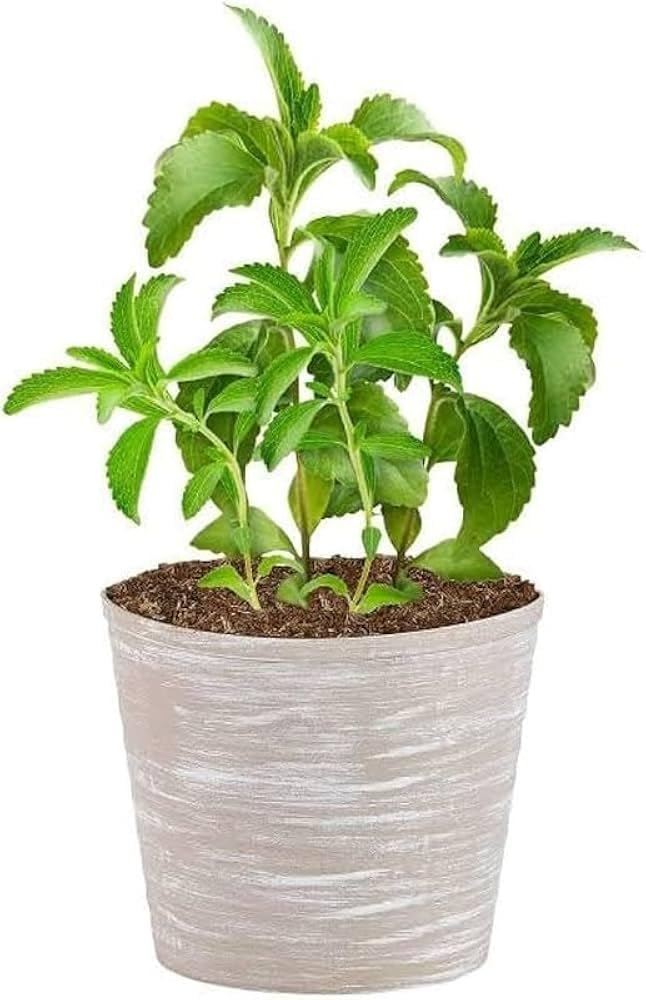
The name Meethi Tulsi is a Hindi term that literally translates to “Sweet Tulsi” or “Sweet Basil.” It is used for Stevia in India for two main reasons:
- Visual Similarity: The Stevia plant (Stevia rebaudiana) has small, green, oval-shaped leaves that closely resemble the leaves of the Tulsi (Holy Basil) plant.
- Medicinal Properties: In India, Tulsi is revered as a “Mother Medicine” or sacred herb. Because Stevia is also a plant-based herb with significant health benefits—such as being a zero-calorie, diabetic-friendly sweetener—it was naturally nicknamed “Meethi Tulsi” to highlight its herbal and beneficial nature. Quora +5
Important Distinction
While they look alike and share a name in common parlance, they belong to entirely different botanical families:
- Stevia (Meethi Tulsi): Belongs to the Asteraceae (sunflower) family and is used primarily as a sweetener.
- Tulsi (Holy Basil): Belongs to the Lamiaceae (mint) family and is used for religious and medicinal purposes, but is not sweet. Quora +4
In some regions, it is also referred to as Madhu Tulsi, Meethi Patti (Sweet Leaf), or Chini Tulsi. Quora +2
Would you like to know how to grow your own Meethi Tulsi plant at home?