Skeletal muscle is a voluntary, striated muscle tissue attached to bones by tendons, responsible for body movement, posture, and heat generation, comprising about 35–40% of body weight. Controlled consciously, these muscles work in pairs to move limbs and stabilize joints. The other two types are cardiac muscle (involuntary heart muscle) and smooth muscle (involuntary organ muscle). Wikipedia +4
Types of Muscle Tissue:
- Skeletal Muscle: Voluntary and striated, these muscles are arranged in bundles attached to the skeleton (e.g., biceps, hamstrings). They act rapidly to allow movement, maintain posture, and stabilize joints.
- Cardiac Muscle: This involuntary, striated muscle is found only in the heart (myocardium). It contracts automatically to pump blood, possessing specialized intercalated discs for synchronized action.
- Smooth Muscle: Involuntary and non-striated, this muscle is found in the walls of hollow internal organs, including the stomach, intestines, blood vessels, and bladder. It works automatically to move substances through the body, such as food through the digestive tract. Cleveland Clinic +6
Skeletal Muscle Characteristics:
- Voluntary Control: Moves when you consciously think about it.
- Striated Appearance: Appears striped under a microscope due to organized actin and myosin filaments.
- Multinucleated: Individual muscle cells contain multiple nuclei.
- Functions: Protects organs, stores nutrients, and produces heat. National Institutes of Health (.gov) +4
Striated
Striated means marked with thin, parallel lines, streaks, bands, or grooves. It describes a striped appearance found in natural elements like rock surfaces, or in biology, specifically referring to muscles with a striped, banded appearance under a microscope (skeletal and cardiac muscle). Cambridge Dictionary +4
Key Details and Usage Examples
- Biology (Striated Muscle): Refers to muscle tissue, such as skeletal muscle, which is attached to bones and responsible for voluntary movement, or cardiac muscle, both of which have a striped pattern due to organized protein filaments.
- Geology & Nature: Used to describe rocks, such as limestone, featuring grooves caused by natural processes like glacial movement.
- Appearance/Texture: Describes surfaces with lines, scratches, or stripes, such as “striated limestone cliffs” or “an emerald striated with a strange intrusive rivulet of azure”. Brainly.in +4
Synonyms
- Striped
- Streaked
- Grooved
- Lined
- Banded
- Ribbed
- Furrowed Cambridge Dictionary +2
Etymology: The term originates from the Latin word striāre, meaning to make grooves.
Groove
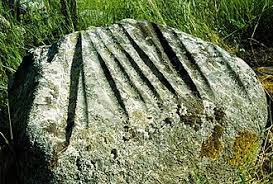


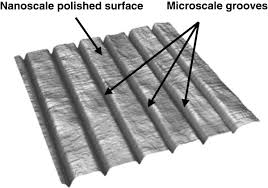
A groove is a long, narrow channel, depression, or furrow made into a surface. Physically, it is a carved-out line, such as in wood, a vinyl record, or a mechanical component. Figuratively, it refers to a settled, consistent routine or, in music, a pronounced, enjoyable rhythmic feel.
In anatomy, a groove is a long, narrow depression, furrow, or channel located on the surface of an organ, tissue, or bone. Often synonymous with a sulcus, these structures serve as pathways for nerves, blood vessels, or tendons to enter or pass along an organ. Vocabulary.com +3
Key details about anatomical grooves:
- Purpose: They provide protection and structural alignment for vessels and nerves.
- Examples: Common examples include the bicipital groove (intertubercular groove) on the humerus, the neural groove in embryology, and the sulci on the surface of the brain.
- Location: They can be found on bones (often for nerve passage) or soft tissue.
- Synonyms: Sulcus (plural: sulci), fissure. Vocabulary.com +4
These structural features are crucial in clinical anatomy for identifying the location of structures or locating landmarks for potential damage or surgical access.